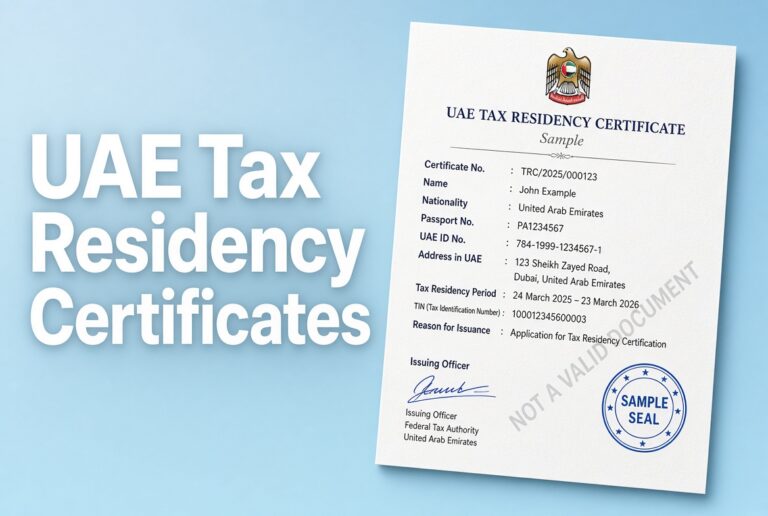
Search for either of the terms: Tax Residency Certificate/Tax Domicile Certificate, and you will find the two used almost interchangeably, which leaves plenty of business owners wondering if they are actually looking for two different things. Here is a straightforward answer, along with the distinction that genuinely matters when you go to apply.
Are They Really Different Documents?
Not in any meaningful sense. What most people call a Tax Domicile Certificate is, in practice, the exact same paperwork the FTA now labels a UAE Tax Residency Certificate. The name changed when the authority responsible for issuing it changed; the certificate itself did not. So when a bank, an accountant, or a tax office abroad mentions a Tax Domicile Certificate, understand that they are describing the document currently issued under the name UAE Tax Residence Certificate, just referred to by its older, pre-2020 title.
This naming shift ties back to a change in administration. Applications used to go through the Ministry of Finance. That responsibility moved to the Federal Tax Authority in late 2020, and the updated terminology followed the handover rather than any change to what the certificate does or who qualifies for it.
The Distinction That Actually Matters
Rather than getting caught up in old versus new naming, focus on the two forms of Tax Residency Certificate in the UAE that the FTA currently issues, because these are genuinely not interchangeable.
Treaty TRC: This version is built for claiming benefits under a Double Taxation Avoidance Agreement (DTAA) the UAE has signed with another nation. Reach for this one when a foreign tax authority needs proof of your UAE residency to lower or waive withholding tax on cross-border income like dividends, interest, or royalties.
Domestic TRC: This version establishes your tax residency status purely within the UAE, usually for local regulatory filings, banking needs, or corporate tax compliance. It will not help you with a treaty claim in another country. Applicants sometimes assume one version covers both purposes; it does not, and mismatching the two is the single most common reason applications for a Tax Residency Certificate Dubai authorities process get sent back or rejected.
Before submitting anything, confirm with whoever is requesting the certificate, whether that is a foreign tax office or a bank, exactly which version they need.
The Real Value of Holding One
A valid certificate does more than sit in a compliance folder. It gives you a documented basis for accessing the UAE’s double taxation treaty network, which can cut or remove tax that would otherwise be deducted twice on the same earnings. It acts as formal evidence of your residency status when banks, regulators, or overseas authorities ask for it. Businesses use it to support transfer pricing positions and financial reporting across jurisdictions. For individuals earning income overseas, holding this certificate can meaningfully lower what you end up paying in total, simply by establishing the UAE, rather than another country, as your recognised tax base.
Skip it, and you risk having the same income taxed twice, once where it was earned and again in your country of origin, which is precisely the outcome the certificate exists to prevent.
Read also: How to Choose the Right Bookkeeping Services in Dubai UAE for Your Business
Get It Right the First Time
Picking the wrong certificate type, or missing a required document, can delay your application by weeks. If you would rather have this handled properly from the outset, Amsri can assess your eligibility and manage the application on your behalf.
Frequently Asked Questions
Effectively, yes. They point to the same document. Tax Residency Certificate in UAE is simply the term the FTA currently uses.
The Federal Tax Authority. The Ministry of Finance handled this before the FTA assumed the role.
No. A Domestic UAE Tax Residence Certificate only holds weight within the UAE. Treaty claims abroad require the Treaty version instead.
It typically remains valid for twelve months from its issue date.
Generally not. Offshore entities, also called International Business Companies, usually fall outside the tax treaty benefits available to mainland and free zone companies, which limits their eligibility for this certificate.